
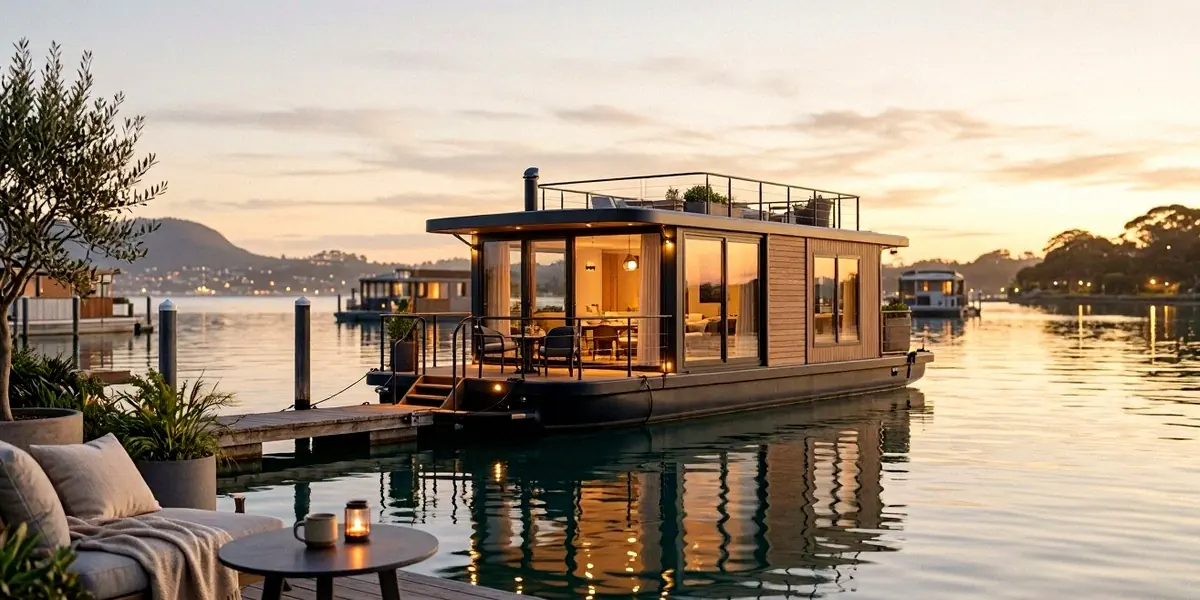
The Floating BnB – Houseboats and Unique Stays
The first time we woke up on a houseboat, it wasn’t the sunrise that got us — it was the sound. A soft, rhythmic lap of water against the hull, like the boat was breathing. We’d anchored overnight on the Murray River, and somewhere between the second coffee and the kookaburras starting up on the bank, something clicked. This wasn’t just accommodation. It was a completely different way of travelling. No lobby music, no hallway noise, no rushing down for breakfast before the buffet closes. Just water, light, and a deck that doubled as our living room. That morning turned a casual weekend away into a full-blown obsession, and it’s the reason we built The Floating BnB — a place to share honest, first-hand reviews of houseboats, floating B&Bs and unique stays, from the Murray River to Yellowknife and everywhere in between.
Why We’re Hooked on Houseboat Holidays in Australia
Australia might not be the first place people think of when someone says “floating accommodation,” but it absolutely should be. We’ve got thousands of kilometres of navigable rivers, calm lakes, sheltered estuaries and quiet coastal waterways — and a houseboat culture that stretches back generations. A houseboat holiday in Australia isn’t a novelty add-on to a normal trip; it is the trip. You wake up somewhere new without packing a bag, you cook on board, you fish off the back deck, and you fall asleep to the sound of water instead of traffic.
What makes it work so well here is the variety. You can cruise the Murray River through red gum forests and historic river towns, drift through the Noosa Everglades in Queensland where the water is tea-coloured and the birdlife is ridiculous, or hire an eco-friendly houseboat on the Hawkesbury River just north of Sydney and be back at work on Monday. Each waterway has its own personality, and each one rewards a different kind of traveller — families, couples, groups of mates, even solo slow travellers who just want quiet.
Compare that to a standard hotel and the difference is obvious. A hotel room is a base. A houseboat is a world. You’re not commuting to the experience; you’re already inside it. And once you’ve done it once, it’s very hard to go back to a room with a minibar and a view of the car park.
The Slow Travel Appeal of Life on the Water
Slow travel has become a bit of a buzzword, but houseboats are where it actually makes sense. You can’t rush a houseboat. Most of them cruise at a walking pace, sometimes slower. You’re not covering distance for the sake of it — you’re moving just enough to change the view. That enforced slowness is the whole point.
We’ve found that a few days on the water resets something. Mornings stretch out. You notice things you’d normally miss — an eagle circling, the way the light changes on the water at 4pm, the smell of eucalypts drifting across from the bank. Meals become events because you’re cooking them slowly on a small galley stove and eating them on a deck. Conversations go longer. Phones get put down, partly because the signal is patchy and partly because there’s nothing urgent to check.
It’s also genuinely good value for groups. Split a houseboat four or six ways and the per-person cost often undercuts a mid-range motel, especially once you factor in cooking your own food instead of eating out three times a day. Slow travel doesn’t have to mean expensive travel — and on the water, it usually doesn’t.
Murray River Houseboats: Australia’s Classic Floating Holiday
If there’s a heartland of Australian houseboating, it’s the Murray. Stretching over 2,500 kilometres across New South Wales, Victoria and South Australia, the Murray has been hosting houseboat holidays for decades, and the infrastructure shows. Marinas at towns like Echuca, Mildura, Renmark and Mannum are stacked with hire fleets, from basic two-berth cruisers to multi-level floating apartments with spas, BBQs and enough beds for three families.
The classic Murray experience is a hire-and-drive trip. You pick up the boat, get a thorough briefing on handling, safety and mooring, then you’re free to cruise at your own pace. Operators like Luxury Houseboats offer exactly this kind of hire-and-drive option, with boats ranging from compact couples’ cruisers to large family vessels with all the mod cons. You don’t need a commercial skipper — you just need to pay attention during the handover and follow the rules of the river.
What we love about the Murray is the rhythm of it. You might cruise for two hours, pull into a sandy bank for lunch and a swim, then push on to a riverside pub for dinner. Towns along the way — Echuca especially — lean into their paddle-steamer history, so you’ll often share the water with heritage boats. It’s nostalgic without being twee, and it’s one of the few holidays where kids genuinely forget about screens.
Noosa Everglades and Other Underrated Waterways
The Noosa Everglades in Queensland is one of Australia’s most underrated waterways for houseboat stays, and we’re genuinely surprised more people don’t talk about it. It’s one of only two everglade systems in the world, and the water is stained dark by tea tree, which gives the whole place an otherworldly look — mirror-still reflections, dense melaleuca forest, and birdlife everywhere. Houseboats here are usually smaller and quieter than the Murray fleets, and the experience is more about stillness than cruising.
Other waterways worth putting on your list:
- The Hawkesbury River, NSW — just over an hour from Sydney, and a favourite for eco-friendly houseboat rentals. Great for weekend escapes where you want to feel remote without driving for a day.
- Lake Eildon, Victoria — huge, sheltered and popular with families, with plenty of secluded inlets to anchor in.
- The Myall Lakes, NSW — a quiet, wildlife-rich system that feels far more remote than it actually is.
- The Coorong, South Australia — windswept, wild and perfect if you want something genuinely different from a river cruise.
The point is that you don’t need to fly overseas to have a world-class floating holiday. Some of the best water in the world is a few hours’ drive from most Australian cities.
Floating B&Bs and Unique Stays We’ve Tested
We don’t write about floating stays we haven’t personally experienced, and we don’t pretend everything is amazing. Some floating B&Bs are worth every cent. Others are a floating shed with a nice photo on the booking site. Our job is to tell you which is which.
Over the past few years we’ve stayed on everything from a hand-built houseboat on the Hawkesbury River to a converted ice-fishing shack in Yellowknife, and we’ve learned that “unique stay” is one of the most abused phrases in travel. A property being unusual doesn’t automatically make it good. What makes a floating stay great is the same thing that makes any accommodation great: thoughtful design, honest hosts, working plumbing, and a genuine sense of place. The floating part is a bonus, not a substitute.
What Actually Counts as a Floating B&B?
We use “floating B&B” fairly loosely, but there are a few distinct categories worth knowing about before you book:
- Traditional houseboats — self-contained vessels you hire and often drive yourself. You get a kitchen, bedrooms, bathroom and deck. Most Australian houseboats fall into this bucket.
- Stationary floating B&Bs — permanently moored boats converted into B&B-style accommodation. Breakfast is often included, and you don’t need any boating experience.
- Overwater bungalows — resort-style villas built on stilts over lagoons, most famously in the Maldives and French Polynesia. Luxurious, expensive, and not really “boating” at all.
- Quirky floating stays — converted ferries, floating cabins, boatels, and one memorable floating sauna we’re still not sure how to categorise.
The key distinction is between staying on the water and travelling on the water. A floating B&B is usually the former — you arrive, you stay put, you relax. A houseboat holiday is the latter — the movement is part of the experience. Both are great, but they suit different trips.
Yellowknife Houseboats: Our Northern Lights Bucket-List Stay
Yellowknife, in Canada’s Northwest Territories, is famous for two things: the aurora borealis and its houseboat community. The two are connected. Yellowknife sits on Great Slave Lake, right under the auroral oval, which means on a clear night you can lie in bed on a houseboat and watch the northern lights ripple across the sky. It’s one of the few places in the world where you can do that without freezing on a viewing platform.
The houseboat scene here is genuinely unique. Yellowknife’s houseboat village, moored in Yellowknife Bay, is a real community — people live there year-round, and in winter the boats freeze into the ice and the residents snowmobile in and out. Some of these boats operate as floating B&Bs in summer, and a handful stay open in winter for aurora chasers. We stayed on one in late September, when the lake was still liquid but the nights were cold enough for the aurora to put on a show. Waking up to a frozen deck and a sky still faintly green was one of the most surreal travel experiences we’ve had.
Is it worth the flight? For us, absolutely — but with caveats. Yellowknife is remote, flights are expensive, and the houseboat experience there is more rustic than luxurious. You’re paying for location and novelty, not thread counts. If you want a five-star floating suite, look elsewhere. If you want to fall asleep under the aurora on a boat that’s frozen into a lake, this is your place.
Overwater Bungalows vs. Houseboats: Which Suits You?
This is one of the questions we get asked most, and the answer depends entirely on what you want from a trip.
Choose an overwater bungalow if: you want resort service, spa treatments, snorkelling straight off your deck, and you’re happy to pay a premium for polish. The Maldives, Bora Bora and parts of Malaysia do this beautifully. You won’t be driving anything, and you won’t be moving — the bungalow is the destination.
Choose a houseboat if: you want freedom, self-catering, a sense of adventure, and the ability to change your view whenever you like. Australian houseboats, in particular, are far more affordable than overwater bungalows and much better suited to families and groups. You’ll do more cooking, more steering, and more exploring.
In our experience, the people who love houseboats are the ones who’d rather be doing than being served. The people who love overwater bungalows want to switch off completely and be looked after. Neither is wrong — they’re just different holidays.
Planning Your Own Floating Getaway: Our Practical Guide
Booking a floating stay isn’t complicated, but there are a few things worth knowing before you commit. Here’s the advice we give friends when they ask how to get started.
Do You Need a Licence to Hire a Houseboat?
This is the single most common question, and the answer is: it depends on the waterway. Some Australian waterways require a boat licence to hire a houseboat, while others offer hire-and-drive with a briefing only. In New South Wales, for example, you generally need a licence to operate a houseboat on most waterways, though some operators run supervised introductory options. On the Murray River, the rules vary by state — South Australia and Victoria are generally more relaxed for hire-and-drive, while parts of NSW are stricter.
In practice, most reputable operators make this very clear at the booking stage. If you don’t have a licence, ask specifically whether the waterway allows hire-and-drive without one. Many popular Murray River operators, including Luxury Houseboats, cater directly to unlicensed hirers with comprehensive handovers and on-water support. If a licence is required, some companies can arrange a temporary permit or provide a skipper for an additional fee.
Either way, don’t let the licensing question put you off. If you can drive a car and follow instructions, you can handle a houseboat on a calm river. The briefing covers everything: steering, mooring, anchoring, safety gear, and what to do if something goes wrong.
Best Seasons and Budgets for Floating Stays
Timing matters more than most people realise. Here’s how we think about seasons and budgets across the main floating destinations:
- Murray River: Spring and autumn are ideal — warm days, cool nights, fewer crowds. Summer is peak season and prices jump accordingly, especially around Christmas and Easter. Winter is quiet and cheap, but cold mornings on the water are no joke.
- Noosa Everglades: Best from April to October, when humidity drops and the water is glassy. Summer can be sticky and stormy.
- Hawkesbury River: A year-round destination, though spring and autumn are the sweet spots. Weekend rates are significantly higher than midweek.
- Yellowknife: Summer for the midnight sun and lake cruising; late August to early April for aurora. Winter houseboat stays are a completely different experience and require proper cold-weather gear.
On budget, expect to pay anywhere from around $300 to $1,500 per night for an Australian houseboat, depending on size, location and season. Split across a group, that’s often $50–$150 per person per night — genuinely competitive with mid-range hotels. Overwater bungalows internationally start higher and go up fast. Floating B&Bs sit somewhere in between.
Our advice: book midweek if you can, travel in shoulder season, and don’t over-spec the boat. A smaller, simpler houseboat on a beautiful stretch of river beats a giant one on a boring stretch every time.
What to Pack for a Night on the Water
Packing for a floating stay is different from packing for a hotel. Space is tighter, the environment is wetter, and the weather can turn quickly. Here’s our standard list:
- Soft bags, not hard suitcases — they squash into awkward storage far more easily.
- Layers — even in summer, nights on the water get cool.
- Non-slip shoes — decks get slick, especially after rain or morning dew.
- Sunscreen and a hat — reflections off the water amplify UV dramatically.
- Insect repellent — rivers and everglades mean mozzies, especially at dusk.
- Torch or headlamp — helpful for mooring after dark and finding things on deck.
- Food and drinks — most houseboats have a galley, but provisions are usually your responsibility.
- Entertainment that doesn’t need Wi-Fi — cards, books, board games, fishing gear.
- A basic first-aid kit — because the nearest pharmacy might be an hour’s cruise away.
One thing we’d add: bring less than you think you need. Half the joy of a floating stay is the simplicity. If you’re packing like you’re moving house, you’re probably overthinking it.
Beyond Australia: Floating Stays Worth the Flight
We’re obviously biased toward Australian waterways, but some international floating stays are genuinely worth the airfare. Here are the ones that have stuck with us — and why.
Yellowknife in Winter: Houseboats, Ice and Aurora
We’ve already sung Yellowknife’s praises, but winter there deserves its own mention. Once Great Slave Lake freezes, the houseboat community becomes an ice-bound village. Residents snowmobile in, fishing holes are cut through the ice, and the aurora season is in full swing. Some operators run winter houseboat stays specifically for aurora viewing, and the combination of ice fishing, cold-weather gear and green skies overhead is unlike anything else we’ve done.
It’s not for everyone. It’s cold — properly cold, -30°C cold — and the logistics take planning. But if you’ve ever wanted to combine a genuinely unusual stay with one of the world’s best aurora viewing locations, this is the trip. Book well ahead, pack seriously, and be prepared for a story you’ll tell for years.
Kerala and Amsterdam: Classic Floating Stays Compared
Two very different classics, both worth experiencing.
Kerala, India: The backwater houseboats of Kerala — traditionally called kettuvallams — are one of the world’s great floating experiences. You cruise through palm-lined canals, eat freshly cooked South Indian food prepared on board, and stop at villages along the way. It’s slow, warm, and deeply atmospheric. The boats range from basic to genuinely luxurious, and the crew usually includes a cook. Best from November to February.
Amsterdam, Netherlands: Amsterdam’s canal houseboats are a different beast entirely — stationary, often beautifully converted, and sitting right in the middle of one of Europe’s most walkable cities. You get the romance of floating accommodation with the convenience of a city break. It’s a great option if you want to try floating life without committing to driving a boat or being remote.
If we had to pick: Kerala for the immersive, slow-travel experience; Amsterdam for a short city break with a twist. Both are worth the flight, and both will change how you think about accommodation.
How We Choose Which Floating Stays to Feature
We get pitched a lot of floating stays, and we say no to most of them. Here’s the filter we apply:
- We’ve stayed there. No armchair reviews. If we haven’t personally experienced it, we don’t recommend it.
- It has to be genuinely floating. A hotel with a “water view” isn’t a floating stay.
- Value matters. We’ll happily recommend a rustic houseboat if it’s priced fairly, and we’ll happily warn you off a luxury one that isn’t.
- Hosts make or break it. A great host on a basic boat beats a mediocre host on a flash one.
- Environmental responsibility counts. We favour operators who take their impact on the water seriously, especially in sensitive systems like the Noosa Everglades and the Hawkesbury.
That last point is increasingly important to us. Floating accommodation sits directly on the environment it depends on, so operators who cut corners on waste, fuel or mooring practices are undermining the very thing they’re selling.
Our Team’s Honest Take on the Floating Stay Trend
Floating accommodation has gone from niche to mainstream fast. Ten years ago, booking a houseboat meant ringing a local operator and hoping for the best. Now there are dedicated booking platforms, Instagram-famous floating cabins, and a steady stream of “unique stay” listings that range from inspired to absurd. We’ve watched the trend closely, and we have opinions.
What We Love About the Floating B&B Boom
The upside is real. More competition means better boats, better service and more choice. Operators who used to get away with tired interiors and vague safety briefings are being forced to lift their game. We’re seeing genuinely beautiful eco-friendly houseboats on the Hawkesbury River, thoughtfully designed floating cabins in Scandinavia, and a new generation of Australian operators who treat sustainability as a core part of the product rather than a marketing line.
We also love that the trend is pulling travellers toward slower, more deliberate holidays. Anything that gets people off the conveyor belt of city-hopping and onto a river for three days is a good thing in our books. And the rise of floating B&Bs has made the experience accessible to people who don’t want to drive a boat — you can now stay on the water without any of the responsibility.
Where the Trend Gets It Wrong
Here’s where we get cranky. The word “unique” has been weaponised. We’ve seen listings that charge five-star prices for a floating shed with a bucket for a toilet and a host who disappears after check-in. Novelty is not a substitute for quality, and too many operators are banking on the fact that guests will forgive almost anything for a good photo.
We’ve also seen genuine safety issues — poorly maintained moorings, inadequate life jackets, vague emergency instructions — and environmental corner-cutting in sensitive waterways. Floating accommodation has a responsibility to the water it sits on, and some operators are clearly more interested in profit than protection.
Our advice: read the fine print, check recent reviews carefully, and don’t be dazzled by the deck photos. A great floating stay is one where everything works, the host is contactable, and the environment is respected. If any of those are missing, walk away.
What’s Next for The Floating BnB
We’re expanding. Over the next year we’ll be adding more first-hand reviews from Australian waterways — including deeper coverage of the Noosa Everglades, more Hawkesbury River operators, and a full guide to Murray River houseboat hire for first-timers. We’re also planning return trips to Yellowknife, both summer and winter, and we’re working on a comparison guide to overwater bungalows across the Pacific and Indian Oceans.
But our mission stays the same: honest, first-person reviews of floating stays, with no fluff and no paid placements disguised as recommendations. If we love something, we’ll tell you why. If we don’t, we’ll tell you that too.
FAQ
Do I need a boat licence to hire a houseboat in Australia?
It depends on the waterway. Some Australian waterways require a boat licence to hire a houseboat, while others offer hire-and-drive with a briefing only. The Murray River is generally more relaxed than parts of NSW, and many operators — including Luxury Houseboats — cater specifically to unlicensed hirers with comprehensive handovers. Always confirm the licensing requirements with the operator before you book.
What’s the difference between a floating B&B and a houseboat holiday?
A floating B&B is usually a stationary boat converted into B&B-style accommodation — you arrive, stay put and relax, often with breakfast included. A houseboat holiday involves actually cruising the waterway, often driving the boat yourself. Both are wonderful, but they suit different trips: floating B&Bs for a low-effort escape, houseboats for a more active, exploratory holiday.
Is Yellowknife worth visiting just for the houseboats?
For us, yes — but it’s a specific kind of trip. Yellowknife’s houseboat community is genuinely unique, and the aurora viewing from a floating deck is unforgettable. That said, it’s remote, flights are expensive, and the accommodation is more rustic than luxurious. Go for the experience and the northern lights, not for five-star comfort.
What’s the best Australian waterway for a first houseboat trip?
The Murray River is the classic choice — well-established operators, easy hire-and-drive options, and plenty of riverside towns to explore. If you’re after something quieter and more atmospheric, the Noosa Everglades in Queensland is one of Australia’s most underrated waterways for houseboat stays. The Hawkesbury River near Sydney is also excellent for a short weekend escape, with several eco-friendly houseboat rentals available.
When is the best time of year for a floating stay in Australia?
Spring and autumn are ideal for most Australian waterways — warm days, cool nights and fewer crowds. Summer is peak season on the Murray and prices rise sharply around Christmas and Easter. Winter is quieter and cheaper but colder, especially on the water. For the Noosa Everglades, aim for April to October when humidity drops and the water is at its glassiest.
Whether you’re drawn to the slow drift of a Murray River houseboat, the tea-coloured stillness of the Noosa Everglades, or the frozen, aurora-lit decks of a Yellowknife floating B&B, our goal at The Floating BnB is simple: to be your trusted, first-person guide to houseboats and unique stays. We’ve tested these experiences ourselves, we’ve made the mistakes so you don’t have to, and we’ll keep telling you honestly what’s worth your money and what isn’t. Explore our reviews, dig into the guides, and if you want more of this in your inbox — subscribe and come float with us.
Latest articles
- Yellowknife Bay: Canada’s Houseboat Community
 Yellowknife Bay: Canada’s Houseboat Community If you’ve ever drifted down the Murray River on a houseboat or moored at Lake Eildon for
- Winter on Ice: Life on a Frozen Bay
 Winter on Ice: Life on a Frozen Bay You wake at 7:40am to a sound that shouldn’t exist on a houseboat: silence.
- What It’s Like to Stay on a Floating B&B
 What It’s Like to Stay on a Floating B&B The hull creaks once, softly, and the whole room tilts just enough to
- Unique Stays: Treehouses, Lighthouses and Boats
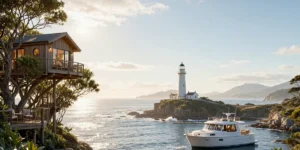 Unique Stays: Treehouses, Lighthouses and Boats You wake to the sound of water lapping against the hull, or perhaps to the rustle
- Seeing the Northern Lights from the Water
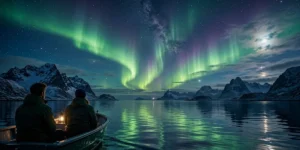 Seeing the Northern Lights from the Water: A Floating B&B Adventure There’s a moment that happens on a floating B&B in Yellowknife
- Running a B&B: What Hosts Should Know
 Running a B&B: What Hosts Should Know The first time we hosted guests on a floating B&B, we thought we had it